






By Booker Omole
General Secretary, Communist Party Marxist Kenya
Submitted to Marxistische Blätter for publication in the forthcoming edition, “In Praise of Communism”
26 August 2026
For me, communism is not an abstract doctrine, nor is it a foreign idea that Africa must import from Europe. It is the science and organised practice of human emancipation. It is the struggle to create a society in which human beings are no longer divided between those who own and those who labour, between those who command and those who obey, between those who accumulate wealth and those whose labour produces it.
I speak of communism from Kenya, from Africa, and from a continent whose liberation remains unfinished. Kenya achieved formal independence from British colonial rule, but the end of colonial administration did not end the structures of economic dependence, class exploitation and imperialist domination. This is why communism is not an abstract question for me. It is a question of history. It is a question of land, labour, sovereignty, dignity and the future of humanity.
Africa did not begin its history with colonialism, and capitalism is not the only form of social organisation humanity has known. Our peoples possessed communal forms of production and social life long before European conquest. Colonialism violently disrupted these historical processes, seized land and resources, subordinated African economies and incorporated the continent into an international system of accumulation whose principal centres lay elsewhere.
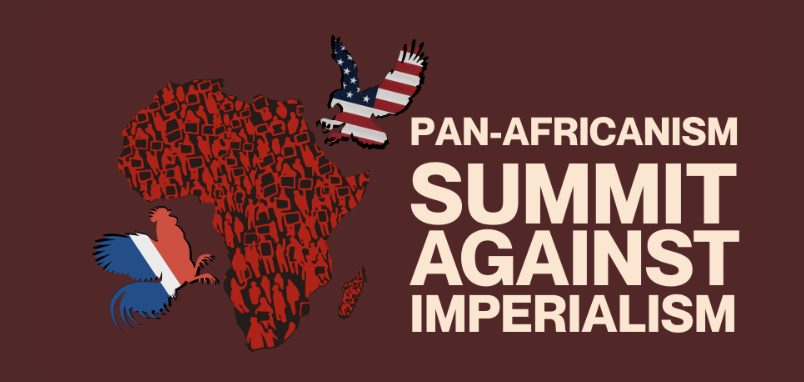
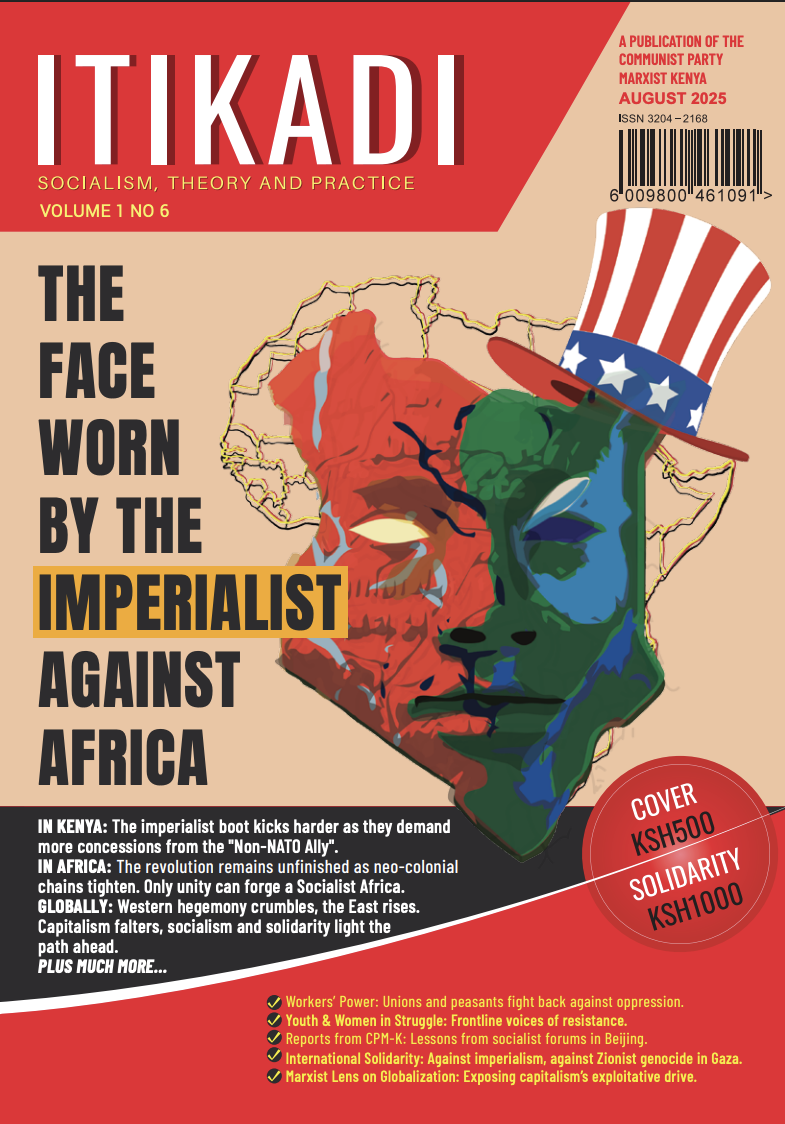
Political independence changed the form of domination, but did not necessarily abolish its substance. The colonial flag could be lowered while economic dependence survived in new forms. This is the reality of neocolonialism. African states may possess national governments while their economies remain dependent on foreign capital, their natural resources are extracted for external accumulation and their political choices are constrained by imperialist interests.
Therefore, I cannot understand African liberation simply as the transfer of political office from Europeans to Africans.
The fundamental question is: liberation for whom?
An Africa ruled by Africans but dominated by a small class of African capitalists, while workers and peasants remain poor, dispossessed and exploited, has not completed the work of liberation. National identity does not abolish class contradiction. The worker and the capitalist may share a nationality, but they do not occupy the same position in the relations of production. The landless peasant and the large landowner may both be African, but they do not experience the question of land in the same way.
African liberation must therefore be both national and social. It must confront imperialism, but it must also confront the class relations through which exploitation is reproduced. In Kenya, this is the historical basis of the National Democratic Revolution: the struggle for genuine national sovereignty, against imperialist domination and the surviving structures of exploitation, led by the working people and directed towards a socialist future.
This is where the African communist tradition becomes indispensable.
Dedan Kimathi and the Kenya Land and Freedom Army remind us that the Kenyan struggle was never simply about changing the colour of the flag. It was about land and freedom. Pio Gama Pinto represented another current of the Kenyan liberation struggle, connecting national emancipation with socialism and international solidarity. Across Africa, from Kwame Nkrumah and Amílcar Cabral to Walter Rodney and Thomas Sankara, revolutionaries confronted the same fundamental contradiction from different historical circumstances: political independence cannot be separated from economic emancipation.
The African revolution cannot stop at the gates of the colonial state.
For me, communism is therefore inseparable from the struggle for land and freedom. It is inseparable from the liberation of the worker and the poor peasant. It is inseparable from economic sovereignty and from the historic aspiration for a united and socialist Africa.
But communism is not merely an aspiration. It requires organisation.
Capitalism is organised. Imperialism is organised. The ruling classes possess institutions, capital, armies, political parties, media and international alliances through which they reproduce their power. The exploited cannot defeat an organised system through spontaneous anger alone. The anger of the masses is powerful, but revolutionary transformation requires that anger to become consciousness, organisation and political power.
This is why the Communist Party matters.
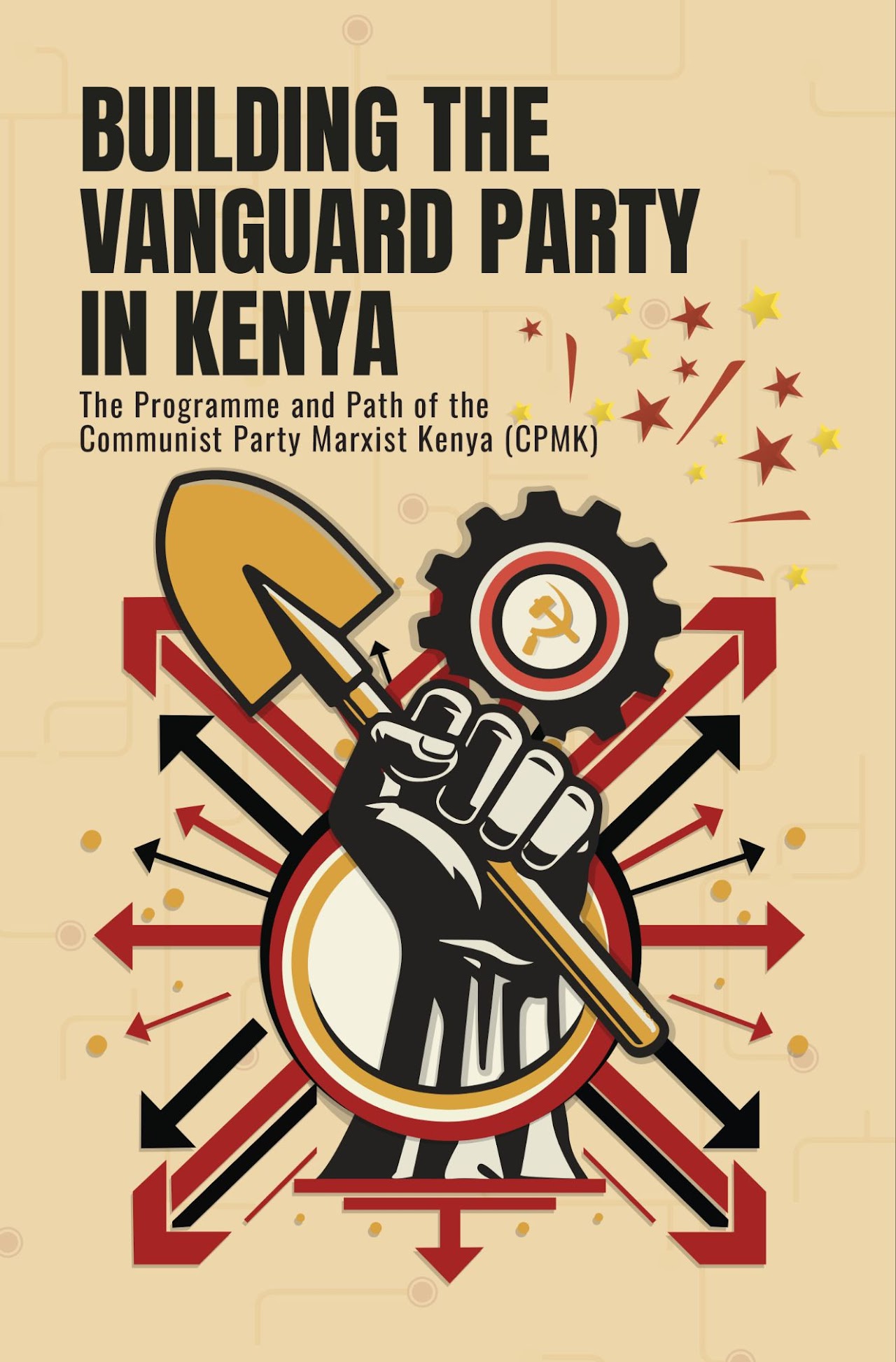
The Communist Party is not an electoral machine seeking office for its own sake. It is an instrument through which the working class develops political consciousness, organisation and revolutionary capacity. Its task is to unite theory with practice, to learn from the masses, to organise their experience, to raise it to political consciousness and to return it to the masses as organised revolutionary practice.
From the masses, to the masses.
This is not merely a slogan. It is a method of revolutionary work.
Marx teaches us to look beneath appearances and discover the material relations that shape society. Lenin teaches us that revolutionary consciousness must become organised political power. Mao teaches us that revolutionaries must maintain a living connection with the masses and transform revolutionary theory into concrete practice.
For an African communist, these are not quotations to be memorised. They are methods to be applied to our own conditions.
We must reject both mechanical imitation and nationalist exceptionalism. Marxism is universal because capitalism has become a world system, but its application must always be concrete. The revolutionary in Kenya must understand Kenya. The revolutionary in Africa must understand Africa. We cannot solve African problems by mechanically copying another country’s path. Nor can we abandon scientific socialism in the name of a supposedly unique African path.
Our task is to develop Marxism through the concrete realities of African class struggle.
This is also why Pan Africanism and proletarian internationalism must belong together. Africa was divided by colonialism into artificial political units, while imperialism continues to operate across borders. Capital crosses borders. Corporations cross borders. Finance crosses borders. Military alliances cross borders. Imperialism is international.
The response of the working class must therefore also be international.
The struggle of the Kenyan worker is connected to the struggle of the Congolese miner, the Palestinian people, the Cuban people and workers and oppressed peoples everywhere who confront imperialist domination. Our solidarity is not charity. It is the recognition of a common historical struggle.
A genuinely liberated Africa cannot be merely an Africa with African faces in positions of authority. It must be an Africa in which workers and peasants become historical subjects, in which land and natural resources serve society, in which production is organised according to human need and in which the wealth of the continent is used for the development of its peoples rather than the enrichment of foreign corporations and local elites.
This is why I praise communism.
I praise communism because it refuses to accept exploitation as natural.
I praise communism because it tells the worker that poverty is not destiny.
I praise communism because it tells the peasant that landlessness is not eternal.
I praise communism because it tells Africa that dependence is not our historical fate.
I praise communism because it insists that the wealth produced collectively must ultimately serve humanity collectively.
And I praise communism because it restores to the oppressed something that capitalism constantly attempts to take from them: historical agency.
We do not struggle for communism because history has guaranteed our victory. We struggle because history has created contradictions through which another society has become possible. The future is not given to us. It must be made through conscious struggle.
For me, communism is therefore not a dream of a distant age. It is the continuation of every genuine struggle for land, freedom, equality, dignity and human emancipation.
From Kenya, I see the communist struggle as part of Africa’s unfinished liberation, and Africa’s liberation as part of humanity’s unfinished emancipation.
The African revolution remains unfinished.
The struggle continues.
And I remain a communist because I believe that those who produce the wealth of society must ultimately become the masters of their own history.